
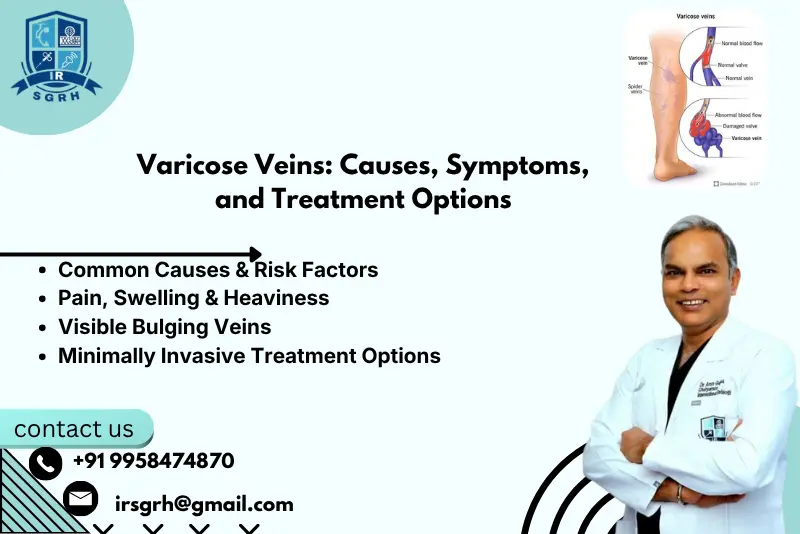
Varicose veins are enlarged, twisted veins that commonly appear in the legs when blood does not flow efficiently back towards the heart. They may cause visible blue or purple veins, leg heaviness, aching, swelling, itching, or discomfort after prolonged standing. Although some people experience only cosmetic concerns, others develop symptoms that affect their daily activities.
Understanding the causes, recognising the warning signs, and exploring appropriate varicose veins treatment options can help patients make informed decisions about their vascular health. Treatment may include lifestyle changes, compression stockings, minimally invasive procedures, or surgery, depending on the severity of the condition and the results of a clinical assessment.
For patients exploring treatment in Delhi, consultation with Dr. Arun Gupta, Interventional Radiologist, at the Department of Interventional Radiology, Sir Ganga Ram Hospital, can help determine whether further evaluation or an image-guided treatment approach is appropriate.
This guide, Varicose Veins: Causes, Symptoms, and Treatment Options, explains how varicose veins develop, how doctors diagnose them, and which treatment options may be considered for individual patients.
Understanding Varicose Veins: Causes, Symptoms, and Diagnosis
What Are Varicose Veins?
Varicose veins develop when the one-way valves inside veins become weak or damaged. These valves normally help blood travel towards the heart. When they do not function properly, blood can flow backwards and accumulate inside the veins, causing them to enlarge and become twisted.
The condition most commonly affects the legs because the veins must work against gravity to return blood to the heart. The appearance and severity of varicose veins vary from person to person.
The primary goal of varicose veins treatment is to relieve symptoms, address abnormal blood flow where appropriate, and reduce the risk of complications. This guide to Varicose Veins: Causes, Symptoms, and Treatment Options explains the condition in simple, patient-friendly language.
Common Symptoms of Varicose Veins
Symptoms may develop gradually and become more noticeable after prolonged standing or sitting. Some patients have visible veins without discomfort, while others experience persistent symptoms.
Common signs include:
- Visible, enlarged veins: Blue or purple veins that appear twisted or bulging beneath the skin.
- Leg heaviness: A tired or heavy sensation, particularly towards the end of the day.
- Aching or discomfort: Pain that may increase after standing for long periods.
- Swelling: Puffiness around the ankles and lower legs.
- Itching: Irritation or dryness around affected veins.
- Skin changes: Darkening, inflammation, or thickening of the skin near the ankles.
- Leg cramps: Some patients experience cramps, especially at night.
In advanced cases, chronic venous disease can cause skin ulcers near the ankles. Sudden leg swelling, warmth, redness, or significant pain requires prompt medical assessment because these symptoms can indicate a blood clot or another serious condition.
What Causes Varicose Veins?
Varicose veins usually develop because the valves in the veins do not work effectively. Several factors can increase the likelihood of developing the condition.
- Family history: A genetic predisposition may increase the risk of weak vein walls or faulty valves.
- Age: Vein walls and valves may become less effective over time.
- Prolonged standing or sitting: Remaining in one position for extended periods can contribute to venous symptoms.
- Pregnancy: Hormonal changes and increased blood volume can place additional pressure on the veins.
- Excess body weight: Additional pressure on the veins may contribute to venous problems.
- Previous blood clots: Earlier venous damage can interfere with normal blood flow.
- Hormonal influences: Hormonal changes may affect vein walls and contribute to the development of varicose veins.
Understanding these risk factors helps doctors recommend suitable preventive measures and assess whether further investigation is needed.
How Are Varicose Veins Diagnosed?
Diagnosis generally begins with a medical history and physical examination. The doctor may ask about pain, swelling, family history, previous blood clots, and how symptoms change throughout the day.
A venous Doppler ultrasound is commonly used to assess blood flow and identify reflux, which occurs when blood moves backwards through a vein. The examination can also help identify the veins involved and assess the severity of venous disease.
The results help determine whether conservative management, a minimally invasive procedure, or surgery may be appropriate. Not every visible varicose vein requires an intervention.
Varicose Veins Treatment: Procedures, Benefits, and Options
What Are the Available Treatment Options?
The appropriate approach depends on symptoms, ultrasound findings, the size and location of the affected veins, overall health, and the patient’s treatment goals.
The main options include lifestyle measures, compression therapy, minimally invasive procedures, and surgery.
1. Lifestyle Changes and Compression Stockings
Lifestyle measures may help reduce discomfort and swelling, although they do not reliably eliminate established varicose veins.
Doctors may recommend:
- Walking regularly to support circulation.
- Avoiding prolonged periods of standing or sitting.
- Elevating the legs when resting.
- Maintaining a healthy body weight.
- Wearing compression stockings when clinically appropriate.
Compression stockings apply graduated pressure to the legs and may improve symptoms. They do not repair damaged valves, and suitability should be assessed by a healthcare professional, particularly in patients with arterial circulation problems.
2. Laser Treatment for Varicose Veins
Laser treatment for varicose veins, commonly called endovenous laser ablation (EVLA), is a minimally invasive procedure used to treat selected veins with abnormal blood flow.
During the procedure, the doctor uses ultrasound guidance to position a thin catheter inside the affected vein. Laser energy is delivered through the catheter, heating and closing the vein. Blood is then redirected through other healthy veins.
The procedure is generally performed under local anaesthesia, sometimes with additional sedation depending on the clinical setting. Many patients return home the same day.
Laser treatment may be suitable for patients with confirmed venous reflux in veins that can be treated with this technique. However, it is not the best option for every patient, and other procedures may be more appropriate depending on the ultrasound findings.
This approach is one of the modern options discussed in Varicose Veins: Causes, Symptoms, and Treatment Options.
3. Radiofrequency Ablation
Radiofrequency ablation uses heat generated by radiofrequency energy to close an affected vein. Like endovenous laser ablation, it is performed using a catheter under ultrasound guidance.
Both techniques are used to treat selected cases of superficial venous reflux. The choice depends on vein anatomy, clinical findings, available expertise, and individual patient factors.
4. Sclerotherapy
Sclerotherapy involves injecting a medical solution or foam into selected veins to make them close. It may be used for certain smaller varicose veins, tributary veins, or residual veins after another procedure.
The technique and number of sessions depend on the size, location, and extent of the veins being treated.
5. Surgical Treatment
Traditional surgical options include ligation and vein stripping. These may be considered in selected patients when minimally invasive treatments are unsuitable or when the anatomy and extent of the disease require a different approach.
The decision should be based on clinical assessment rather than assuming that surgery is always necessary.
Benefits of Minimally Invasive Treatment
For appropriately selected patients, minimally invasive procedures may offer several advantages:
- Small access points: Treatment usually requires only a small skin puncture rather than a large surgical incision.
- Less tissue disruption: The procedure avoids extensive removal of the affected vein.
- Shorter recovery: Many patients resume normal light activities relatively quickly.
- Symptom improvement: Treatment of abnormal venous reflux may reduce aching, heaviness, and swelling.
- Outpatient treatment: Many procedures can be completed without an overnight hospital stay.
These benefits depend on the procedure, the patient’s health, and the severity of the venous disease. Possible complications include bruising, tenderness, skin burns, nerve irritation, pigmentation changes, and blood clots. Varicose veins can also recur or develop in other veins after treatment.
Recovery, Treatment Comparison, and Cost Factors
Laser Treatment vs Traditional Surgery
Both minimally invasive procedures and surgery can be effective in appropriately selected patients. The differences relate to how the vein is treated, the recovery process, and the patient’s anatomy.
| Feature | Laser treatment | Traditional surgery |
| Technique | Catheter-based heat closes the vein | Vein ligation and/or removal |
| Incisions | Usually small punctures | May involve surgical incisions |
| Anaesthesia | Often local anaesthesia | Depends on the procedure |
| Recovery | Often quicker return to routine activities | May involve a longer recovery |
| Suitability | Selected veins with suitable anatomy | Selected cases where surgery is appropriate |
The comparison is general rather than absolute. Radiofrequency ablation, sclerotherapy, and other techniques may also be suitable alternatives. A duplex ultrasound and specialist assessment help establish the most appropriate option.
Recovery After Varicose Veins Treatment
Recovery varies according to the treatment performed, the extent of the condition, and the patient’s overall health.
After an uncomplicated endovenous laser procedure, many patients can walk shortly afterwards and return to routine light activities within a short period, often within a day or two. Individual recovery times may differ.
Your doctor may recommend:
- Walking regularly during recovery.
- Wearing compression stockings for the advised duration.
- Avoiding strenuous exercise or heavy lifting temporarily, if instructed.
- Keeping any puncture sites clean and following wound-care guidance.
- Attending follow-up appointments and ultrasound examinations when advised.
Seek medical attention if you develop severe or increasing pain, marked swelling, fever, or significant redness. Sudden shortness of breath or chest pain requires emergency assessment.
What Affects the Cost of Varicose Veins Treatment?
The cost of varicose veins treatment in Delhi varies according to the patient’s condition and the recommended procedure. A reliable estimate should be provided only after the relevant clinical assessment.
Factors that may affect the overall cost include:
- The number and size of affected veins.
- Whether one leg or both legs require treatment.
- The type of procedure recommended.
- The complexity of the venous anatomy.
- Ultrasound examinations and other necessary investigations.
- Anaesthesia, hospital or facility charges, and follow-up care.
- Whether additional procedures are required.
Laser treatment, radiofrequency ablation, sclerotherapy, and surgery may have different cost structures. There is no single price that applies to every patient.
Patients searching online for Varicose Veins: Causes, Symptoms, and Treatment Options should compare treatment plans based on clinical suitability, expected benefits, risks, and aftercare rather than price alone.
When Should You Consult a Specialist?
Consider a medical assessment if visible veins are accompanied by persistent pain, swelling, heaviness, itching, or skin changes. Early evaluation can help identify the cause of symptoms and determine whether treatment is needed.
If you are searching for varicose veins treatment near me in Delhi, choose a healthcare professional who can assess your symptoms, review ultrasound findings, and explain suitable treatment alternatives.
Frequently Asked Questions About Varicose Veins
1. What is the most effective treatment for varicose veins?
There is no single treatment that is best for everyone. Endovenous laser ablation, radiofrequency ablation, sclerotherapy, and surgery can all be appropriate in selected cases. The choice depends on venous reflux, vein anatomy, symptoms, and overall health.
2. Can varicose veins disappear without treatment?
Established varicose veins generally do not disappear on their own. Lifestyle changes may help manage symptoms, but procedures may be needed to close or remove affected veins when clinically indicated.
3. Is laser treatment for varicose veins painful?
The procedure is usually performed with local anaesthesia, which helps minimise discomfort. Patients may experience temporary tenderness, bruising, or a pulling sensation afterwards.
4. How long does recovery take after laser treatment?
Many patients resume light daily activities within a day or two, depending on their condition and the procedure. Your doctor will provide individual instructions about exercise, compression stockings, and follow-up.
5. Are varicose veins dangerous?
Many cases are not immediately dangerous, but untreated venous disease can sometimes lead to skin changes, bleeding, superficial vein inflammation, or ulcers. Blood clots are another possible concern. Sudden swelling or significant pain requires prompt evaluation.
6. Can varicose veins return after treatment?
Yes. The treated vein may remain closed, but new varicose veins can develop, and some patients experience recurrent venous reflux. Follow-up and appropriate lifestyle measures can help with ongoing management.
7. Is surgery always necessary for varicose veins?
No. Many patients can be treated with minimally invasive procedures, while others may benefit from conservative management or surgery. The choice depends on the clinical findings.
8. What is the cost of varicose veins treatment in Delhi?
The cost depends on the procedure, extent of venous disease, number of veins treated, investigations, facility charges, and follow-up requirements. An individual estimate should be obtained after a clinical assessment.
9. Which doctor should I consult for varicose veins in Delhi?
You can consult a suitably qualified vascular specialist or an interventional radiologist experienced in evaluating and treating venous disease. The doctor can assess whether ultrasound testing or a minimally invasive procedure is appropriate.
Conclusion: Choose the Right Varicose Veins Treatment
Varicose veins are common, but persistent symptoms should not be ignored. Recognising the causes, understanding the warning signs, and obtaining an accurate diagnosis can help patients choose appropriate care.
As explained in Varicose Veins: Causes, Symptoms, and Treatment Options, treatment may involve lifestyle changes, compression therapy, laser ablation, radiofrequency ablation, sclerotherapy, or surgery. The right approach depends on the individual’s symptoms, ultrasound findings, and overall health.
For patients considering varicose veins treatment in Delhi, a specialist consultation can clarify the available options, expected recovery, potential risks, and likely costs. Early evaluation is particularly important when pain, swelling, skin changes, or ulcers are present.
Book an Appointment with Dr. Arun Gupta
Dr. Arun Gupta
Interventional Radiologist
Consult a specialist to discuss your symptoms, diagnostic evaluation, and whether a minimally invasive treatment may be suitable for your condition.
Department of Interventional Radiology
Sir Ganga Ram Hospital, G20-A, near Ultrasound Department, Old Rajinder Nagar, Rajinder Nagar, New Delhi, Delhi 110060.
Appointment contact :+919958474870