

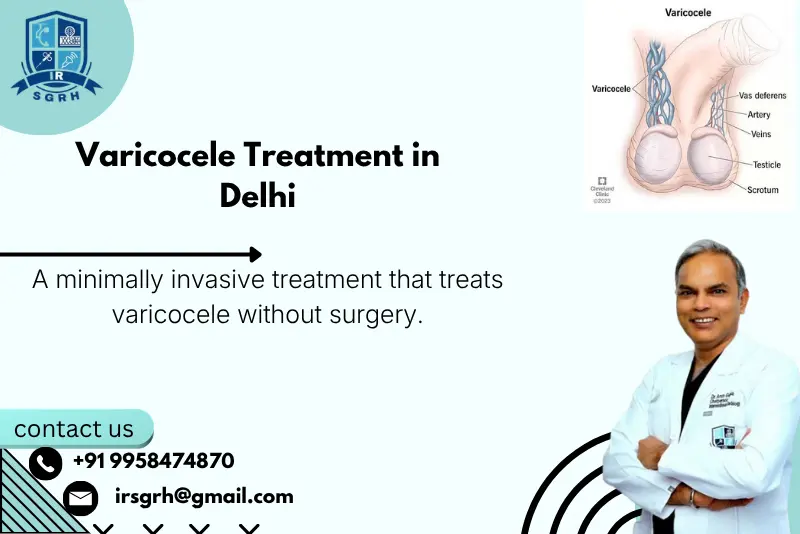
Varicocele is a condition in which the veins surrounding the testicle become enlarged because blood does not drain normally. It may cause scrotal discomfort, heaviness, swelling, or fertility-related concerns, although many varicoceles do not produce noticeable symptoms. Treatment is not automatically required for every patient; the decision depends on symptoms, fertility concerns, testicular changes, examination findings, and other clinical factors.
For patients researching Varicocele Treatment Without Surgery in Delhi, minimally invasive varicocele embolization is an important treatment option to discuss with a qualified interventional radiologist. Unlike conventional surgery, embolization uses a thin catheter and image guidance to block the abnormal vein responsible for the varicocele.
Symptoms, Causes and Diagnosis
Symptoms of Varicocele
A varicocele may remain asymptomatic and be discovered during a routine examination or fertility evaluation. When symptoms occur, they can include:
- Dull or aching scrotal pain
- A feeling of heaviness or dragging in the scrotum
- Enlarged or prominent veins
- Discomfort that becomes more noticeable after standing or physical activity
- Testicular size changes in some patients
- Fertility concerns or abnormal semen parameters
The enlarged veins may sometimes feel like a group of twisted or enlarged veins under the skin. Symptoms can become more noticeable toward the end of the day or after prolonged standing.
Causes of Varicocele
Varicoceles generally develop when the valves within the veins do not function properly. Instead of blood moving efficiently away from the testicle, blood can pool in the veins, causing them to enlarge. The condition is more frequently found on the left side because of differences in venous anatomy.
A varicocele may be associated with fertility problems in some men. It can affect sperm count, sperm movement, or sperm morphology, although the presence of a varicocele does not mean that every patient will experience infertility.
Diagnosis of Varicocele
Diagnosis generally begins with a medical history and physical examination. The doctor may examine the scrotum while the patient is standing and lying down.
A scrotal ultrasound with Doppler may be recommended when additional assessment is required. It can help evaluate the veins and blood flow and may assist in confirming the diagnosis.
If fertility is a concern, a doctor may also recommend semen analysis or other investigations. A proper diagnosis is important before deciding whether Varicocele Treatment Without Surgery in Delhi is appropriate.
Varicocele Treatment Options and Procedure
Varicocele Embolization
One of the main minimally invasive options for Varicocele Treatment Without Surgery in Delhi is varicocele embolization. The procedure is performed by an interventional radiologist using real-time imaging.
During embolization, a thin catheter is introduced through a vein, commonly through access in the groin, neck, or arm. Contrast material is used to visualize the venous anatomy. The catheter is then guided toward the abnormal veins associated with the varicocele.
Small embolization materials, such as coils or other suitable agents, are placed inside the abnormal vein to block its blood flow. Blood can then drain through healthier veins. No conventional surgical incision over the scrotum is required.
The procedure is commonly performed as an outpatient or day-case treatment, although the exact arrangement depends on the patient’s condition and the treating facility. RadiologyInfo states that the procedure is usually completed within about one hour.
Benefits of Minimally Invasive Treatment
When clinically appropriate, varicocele embolization may offer several advantages:
- No conventional surgical incision
- Small catheter access point
- Image-guided treatment
- Usually a short hospital or day-care stay
- Relatively quick return to normal activities
- No scrotal surgical scar
- An alternative for selected patients who require treatment
RadiologyInfo describes embolization as less invasive than conventional surgery, while the British Society of Interventional Radiology notes that it is generally performed as a day-case procedure.
However, embolization is not suitable for everyone. The anatomy of the veins, previous procedures, symptoms, fertility considerations, and overall medical condition must be evaluated before treatment.
About Dr Arun Gupta | Interventional Radiologist in Delhi
Dr Arun Gupta is a Senior Consultant and Chairperson of Interventional Radiology at Sir Ganga Ram Hospital, New Delhi. According to the hospital, he established its Department of Interventional Radiology in 2006. His listed areas of interventional expertise include embolization, vascular interventions, liver and oncological procedures, ablations, portal hypertension interventions, pain management, and musculoskeletal interventions.
Interventional radiology uses imaging guidance to perform minimally invasive procedures through small access points rather than conventional open surgery. For a patient considering Varicocele Treatment Without Surgery in Delhi, consultation with an appropriately trained interventional radiologist can help determine whether catheter-based embolization is clinically suitable.
Dr Arun Gupta’s department at Sir Ganga Ram Hospital provides image-guided minimally invasive procedures across vascular and non-vascular conditions.
Varicocele Treatment Cost, Recovery and Comparison
Varicocele Treatment Cost
The Varicocele Treatment Cost can vary from one patient to another. There is no single price that applies to every procedure because the overall expense may depend on several factors.
These can include:
- Initial specialist consultation
- Ultrasound and other diagnostic investigations
- Hospital or day-care charges
- Interventional radiologist’s fees
- Embolization materials
- Contrast material
- Sedation or anesthesia, when required
- Medicines and post-procedure care
- Follow-up consultations
When asking about Varicocele Treatment Cost, patients should clarify what is included in the quoted package. Comparing only the procedure price may not reflect the total treatment expense.
Recovery and Aftercare
Recovery after embolization is generally shorter than after many conventional surgical procedures, although the individual experience varies.
Patients may experience mild discomfort around the catheter access area or scrotum after treatment. RadiologyInfo states that normal activities can often be resumed within approximately 24 hours, although localized scrotal discomfort may continue for up to a week.
The British Society of Interventional Radiology advises avoiding heavy lifting for approximately two to three days and keeping the puncture site dry for 24 hours. Follow-up is important because the treated veins may take time to shrink.
Patients should always follow the specific instructions provided by their treating doctor.
Embolization vs Surgery
Both embolization and surgical varicocelectomy aim to stop abnormal blood flow through the veins responsible for a varicocele.
| Feature | Varicocele Embolization | Surgical Varicocelectomy |
| Approach | Catheter-based | Surgical |
| Imaging | Performed under image guidance | Depends on surgical technique |
| Incision | Small catheter access site | Surgical incision |
| Hospital stay | Often day-case/short stay | Depends on procedure |
| Recovery | Generally relatively quick | Varies by surgical approach |
| Specialist | Interventional radiologist | Urologic surgeon |
Neither approach is automatically the right choice for every patient. A specialist assessment should consider the patient’s symptoms, fertility goals, venous anatomy, previous treatment, and overall health.
For patients looking for Varicocele Treatment Without Surgery in Delhi, a consultation can help determine whether embolization is an appropriate option. A search for varicocele treatment near me may help identify nearby facilities, but the choice should also consider specialist expertise, imaging capabilities, treatment options, and follow-up arrangements.
Frequently Asked Questions
1. What is Varicocele Treatment Without Surgery in Delhi?
It generally refers to minimally invasive approaches such as varicocele embolization, in which an interventional radiologist uses a catheter and imaging guidance to block the abnormal vein without conventional surgical treatment.
2. Is every varicocele required to be treated?
No. Many varicoceles do not require treatment. Intervention may be considered when there is significant pain or discomfort, fertility-related concern, testicular changes, or another clinically relevant indication.
3. What is varicocele embolization?
Varicocele embolization is an image-guided procedure in which a catheter is used to deliver embolization material into the abnormal vein, redirecting blood flow through healthier veins.
4. Is varicocele embolization a surgery?
It is a minimally invasive interventional radiology procedure rather than conventional open surgery. It uses a catheter inserted through a small access point in a vein.
5. Can varicocele affect fertility?
Yes, varicocele can be associated with reduced fertility in some men and may affect sperm count, motility, or morphology. However, not every man with a varicocele will have fertility problems.
6. How long does varicocele embolization take?
The procedure is usually completed within approximately one hour, although the total time at the medical facility can be longer because of preparation and post-procedure observation.
7. How quickly can I return to normal activities?
Many patients can return to routine activities relatively quickly. However, heavy lifting and strenuous activity may need to be avoided temporarily according to the treating doctor’s instructions.
8. What affects Varicocele Treatment Cost?
The Varicocele Treatment Cost can depend on the consultation, diagnostic tests, facility charges, specialist fees, embolization materials, sedation, and follow-up requirements.
9. Can varicocele return after embolization?
Recurrence is possible after treatment. RadiologyInfo reports that varicoceles return in approximately 5–10% of patients following embolization. Individual outcomes can vary.
10. Who performs varicocele embolization?
Varicocele embolization is performed by a specially trained interventional radiologist who uses imaging guidance to navigate the catheter and treat the abnormal veins.
Conclusion
Varicocele Treatment Without Surgery in Delhi can be an option for appropriately selected patients who require intervention and are suitable for minimally invasive varicocele embolization. The procedure uses image guidance and a catheter to block abnormal venous drainage, avoiding a conventional surgical incision.
The right treatment depends on the patient’s symptoms, examination findings, fertility concerns, venous anatomy, and medical history. A specialist consultation is therefore an important first step before deciding between embolization, surgery, or observation.
If you are experiencing scrotal discomfort, swelling, heaviness, or fertility-related concerns, book an appointment with Dr Arun Gupta, Interventional Radiologist in Delhi, for an individual evaluation and discussion of suitable image-guided treatment options. Dr Arun Gupta is a Senior Consultant and Chairperson of Interventional Radiology at Sir Ganga Ram Hospital, New Delhi, where the department provides a range of minimally invasive, image-guided vascular and non-vascular procedures.
Book an appointment with Dr Arun Gupta to discuss whether varicocele embolization or another treatment approach is appropriate for your condition.