
EXPERT EVALUATION | ADVANCED IMAGING | MINIMALLY INVASIVE OPTIONS
Breast Fibroadenoma Treatment
Minimally Invasive Treatment Options for Selected Patients
A breast lump can be worrying. Get expert evaluation and personalized treatment recommendations from Dr. Arun Gupta, an experienced Interventional Radiologist.

Dr. Arun Gupta
Chairperson & Senior Consultant,
Department of Interventional Radiology
Immediate Past Secretary, ISVIR
Dr. Arun Gupta did his Master’s in Radio Diagnosis from Ganesh Shanker Vidyarthi Medical (GSVM) College, Kanpur in 2002. He pursued super-specialization training during his Senior Residency (SR) in Interventional Radiology from Sanjay Gandhi Post Graduate Institute (SGPGI), Lucknow till 2005.
In 2006, he joined Sir Ganga Ram Hospital as a Consultant and established the Department of Interventional Radiology and presently is the Chairperson of the Department at the hospital. Under the capable leadership of Dr. Arun Gupta, the Department of Interventional Radiology, Sir Ganga Ram Hospital has reached new heights and continuously working for the advancement and the meteoric rise of the department.
Dr. Gupta is an international figure and a key opinion leader in the country in the field of Interventional Radiology with numerous International and National paper publications, and paper presentations and has taken national as well as international guest lectures. He is the Vice-President of the Indian Society of Vascular and Interventional Radiology and a Member of the Asia Pacific Society of Cardio-Vascular Interventional Radiology.
Dr. Arun Gupta has a special academic interest in the Management of Hepatocellular Carcinoma and has one of the largest experiences in the country on Trans-arterial Chemo Embolization and has done a lot of research in this field. He also has one of the largest series of embolization for the management of Hepatic Artery Pseudo-aneurysms. He is the First to perform Percutaneous Hepatic-gastrostomy in the case of Portal Biliopathy all over the world.
He has excellent organizational skills and is involved in all academic and clinical activities of the department. He is a visually oriented person with the highest professional standards and has contributed largely to the development and recognition of Interventional Radiology in India. He also has established a comprehensive training program for Interventional Radiologists which can be implemented across the country to enhance patient care. He also wants to create an environment where healthcare costs can be reduced and treatment for diseases can be made more affordable to the masses.
Get a Callback
Fill in your details and our team will get back to you soon.
- Your information is safe with us.
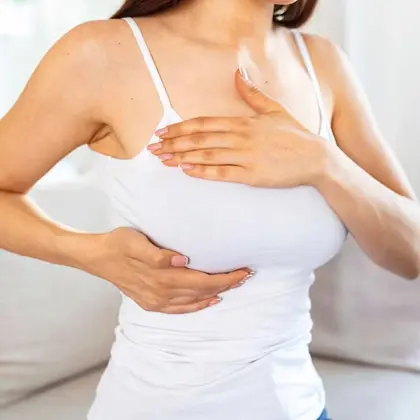
What Is a Breast Fibroadenoma?
A fibroadenoma is a benign (non-cancerous) breast lump made up of glandular and connective tissue.
Many fibroadenomas are small and may simply require observation. However, depending on factors such as size, growth, symptoms, imaging findings and patient preference, treatment may sometimes be considered.
- The important question is not simply: “Do I have a fibroadenoma?” It is: “Does my fibroadenoma need treatment, and what is the most appropriate option for me?”
Found a Lump in Your Breast?
Don't ignore it. Don't panic either.
Breast lumps can occur for many reasons. Fibroadenoma is one of the most common benign breast conditions, particularly in younger women.
You may notice:
- A new lump in the breast
- A firm or rubbery lump
- A lump that moves under the skin
- Breast discomfort or tenderness
- A lump that appears to be increasing in size
- Anxiety about whether the lump needs treatment
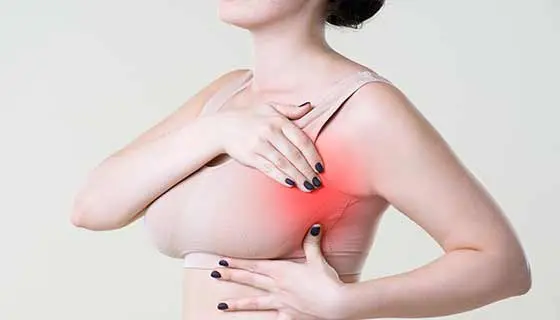
- Get the right evaluation and expert opinion before deciding on treatment.
Breast Fibroadenoma Treatment Options
Treatment depends on the individual case.
Observation
Some fibroadenomas do not require immediate treatment. If the lump is stable and appropriate for observation, your doctor may recommend periodic clinical or imaging follow-up.
Surgical Removal
Traditionally, larger, symptomatic, growing or concerning breast lumps may be removed surgically. While surgery can be appropriate in selected cases, some patients may be interested in less invasive treatment options.
Minimally Invasive Treatment
For appropriately selected fibroadenomas, minimally invasive image-guided treatment may be an option. Depending on the specific diagnosis and clinical situation, techniques such as image-guided vacuum-assisted removal can remove a fibroadenoma through a small access point rather than a conventional surgical incision.
- The right treatment depends on your individual diagnosis.
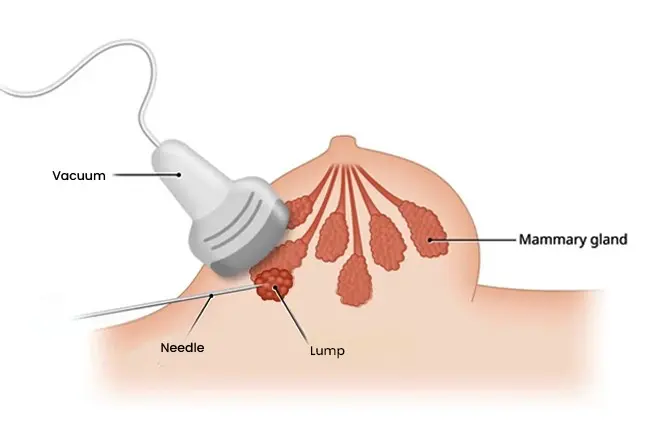
Vacuum-Assisted Removal of Fibroadenoma
A Minimally Invasive Alternative for Selected Patients
Vacuum-assisted breast procedures use imaging guidance and a specialized device to remove targeted breast tissue through a small skin opening.
For appropriately selected fibroadenomas :
- No large surgical incision
- Smaller skin entry point
- Image-guided precision
- Potentially less scarring
- Usually performed as a minimally invasive procedure
- Personalized treatment based on the lump
Not every fibroadenoma is suitable for this approach. A detailed evaluation is required.

Dr. Arun Gupta
MBBS, MD, EBIR
Chairperson and Senior Consultant, Department of Interventional Radiology
Immediate Past Secretary, ISVIR
Dr. Arun Gupta did his Master’s in Radio Diagnosis from Ganesh Shanker Vidyarthi Medical (GSVM) College, Kanpur in 2002. He pursued super-specialization training during his Senior Residency (SR) in Interventional Radiology from Sanjay Gandhi Post Graduate Institute (SGPGI), Lucknow till 2005.
What Patients Say


 Trustindex verifies that the original source of the review is Google.
 Trustindex verifies that the original source of the review is Google.
 Trustindex verifies that the original source of the review is Google.
 Trustindex verifies that the original source of the review is Google.
 Trustindex verifies that the original source of the review is Google.
 Trustindex verifies that the original source of the review is Google.
 Trustindex verifies that the original source of the review is Google.
Why Choose an Interventional Radiologist?
Interventional Radiologists specialize in image-guided, minimally invasive procedures.Using ultrasound and other imaging technologies, the doctor can precisely target the area requiring treatment while minimizing unnecessary disruption to surrounding tissues.
Precision. Minimal invasiveness. Personalized care.
For patients considering minimally invasive treatment for a suitable breast fibroadenoma, an Interventional Radiologist can help assess whether an image-guided approach is appropriate.
Frequently Asked Questions
Is a fibroadenoma cancerous?
Fibroadenomas are generally benign breast lumps. However, any new or changing breast lump should be appropriately evaluated rather than self-diagnosed.
Does every fibroadenoma need to be removed?
No. Some fibroadenomas can be safely monitored. Treatment decisions depend on factors such as size, growth, symptoms, imaging findings and individual circumstances.
Can fibroadenoma be treated without surgery?
For selected patients, minimally invasive image-guided techniques such as vacuum-assisted removal may be considered. Suitability depends on the individual case.
Will fibroadenoma come back after treatment?
The treated fibroadenoma can be removed, but having one fibroadenoma does not necessarily prevent another fibroadenoma from developing elsewhere in the breast. Your doctor can explain your individual follow-up needs.
Is vacuum-assisted removal painful?
The procedure is generally performed using local anaesthesia. Patients may experience some pressure or temporary discomfort, but the experience varies from person to person.
Will there be a scar?
Minimally invasive procedures use a much smaller skin entry point than conventional open surgery, which may result in less visible scarring. The final appearance depends on the individual and the procedure.
How do I know if I am suitable for minimally invasive treatment?
Your suitability depends on the diagnosis, size and location of the fibroadenoma, imaging findings and other clinical factors. A consultation is required before recommending treatment.
Copyright © 2016 interventionalradiologyindia.com All Rights Reserved. | Designed and Marketed by ZAEON