
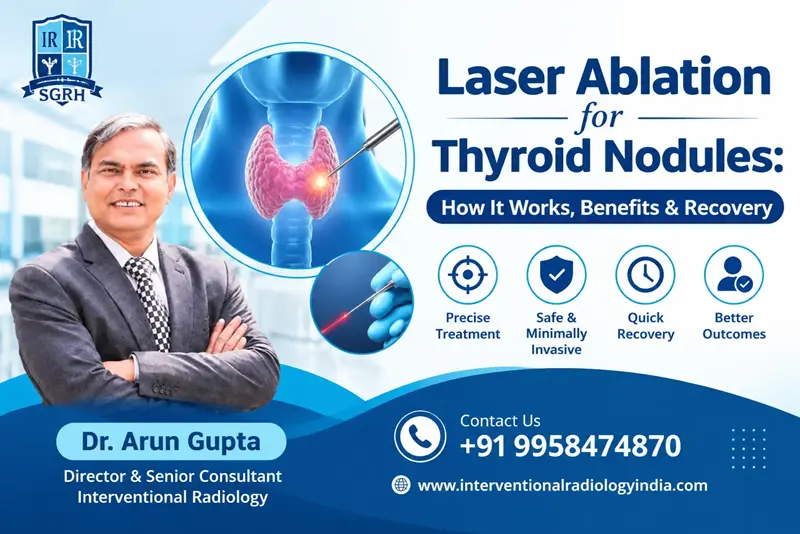
Thyroid nodules are common, and while many are harmless, some can cause visible neck swelling, pressure, difficulty swallowing, voice changes, or anxiety about their appearance. Traditionally, surgery has been used for thyroid nodules that require treatment. However, advances in minimally invasive medicine have introduced alternatives that can treat selected benign thyroid nodules without removing the thyroid gland.
Laser Ablation is one such minimally invasive technique. It uses controlled laser energy to heat and gradually destroy targeted thyroid nodule tissue. For appropriately selected patients, this approach may reduce nodule volume while preserving surrounding healthy thyroid tissue.
This comprehensive guide explains Laser Thyroid Nodule Ablation, including symptoms, causes, diagnosis, treatment procedure, benefits, recovery, comparison with surgery, frequently asked questions, and when to seek specialist care.
If you are considering Non-Surgical Thyroid Nodule Treatment, an evaluation by an experienced interventional radiology team is important because not every thyroid nodule is suitable for ablation.
Understanding Thyroid Nodules: Symptoms, Causes & Diagnosis
A thyroid nodule is a growth or abnormal area within the thyroid gland. Nodules may be solid, cystic, or contain both solid and fluid components. Most thyroid nodules are benign, but proper evaluation is essential before deciding on treatment.
Symptoms of Thyroid Nodules
Many thyroid nodules do not produce symptoms and are discovered during a routine examination or imaging test. Larger nodules, however, may cause:
- A lump or swelling in the neck
- A feeling of pressure in the throat
- Difficulty swallowing
- Difficulty breathing in some cases
- Neck discomfort
- Hoarseness or voice changes
- A visible neck lump
- Cosmetic concerns
- Rarely, symptoms related to excess thyroid hormone
The presence of symptoms does not automatically mean that a nodule is cancerous. A detailed assessment is required to understand its nature.
Causes and Risk Factors
Thyroid nodules can develop for several reasons. Common factors include benign overgrowth of thyroid tissue, thyroid cysts, inflammation, multinodular thyroid disease, iodine-related factors, and certain thyroid disorders.
Age, family history, previous radiation exposure to the neck, and some other medical factors can influence the risk profile of thyroid nodules. However, having one or more risk factors does not mean that a person has thyroid cancer.
Diagnosis Before Laser Ablation
Before considering Laser Thyroid Nodule Ablation: A Complete Guide to the Procedure, Benefits & Recovery, the thyroid nodule must be appropriately assessed.
Evaluation may include:
- Clinical examination: The doctor assesses the neck and thyroid gland.
- Thyroid ultrasound: Ultrasound helps determine the nodule’s size, composition, margins, vascularity, and other characteristics.
- Thyroid function tests: Blood tests such as TSH and, when appropriate, T3 and T4 help assess thyroid function.
- Fine-needle aspiration biopsy: Selected nodules require biopsy to establish whether they are benign.
- Additional imaging or testing: Depending on the case, further investigations may be recommended.
A key principle of safe thyroid ablation is proper patient selection. Ablation should not be used as a substitute for appropriate cancer diagnosis.
Laser Thyroid Nodule Ablation: Procedure & Benefits
Laser Thyroid Nodule Ablation: A Complete Guide to the Procedure, Benefits & Recovery begins with understanding what actually happens during treatment.
Laser ablation is generally performed using ultrasound guidance. The treating specialist places a thin laser fiber into the targeted thyroid nodule through a very small skin puncture. Laser energy is then delivered to selected areas of the nodule.
The heat generated by the laser causes controlled thermal injury to the targeted tissue. Over time, the treated tissue shrinks and the nodule can decrease in volume.
How the Procedure Works
Although the exact protocol varies according to the nodule and the treating centre, the process generally involves:
- Reviewing ultrasound and biopsy findings
- Confirming that the nodule is appropriate for ablation
- Positioning the patient comfortably
- Cleaning and preparing the treatment area
- Administering local anaesthesia
- Inserting a thin laser fiber under ultrasound guidance
- Applying controlled laser energy to the nodule
- Monitoring the treatment area continuously
- Removing the fiber after treatment
- Applying a small dressing to the puncture site
The procedure is minimally invasive because it does not require a traditional surgical incision or removal of the thyroid gland.
Benefits of Laser Ablation
For carefully selected patients with appropriate benign thyroid nodules, potential advantages may include:
- No large surgical incision
- Minimal scarring
- Preservation of much of the normal thyroid tissue
- Usually performed under local anaesthesia
- Short treatment time in many cases
- Potentially quicker return to routine activities
- Reduction in nodule size
- Improvement in pressure-related symptoms
- Improvement in cosmetic appearance when a visible nodule is reduced
Another important consideration is thyroid function. Because the thyroid gland is not surgically removed, the risk of developing hypothyroidism may be lower than with procedures that remove substantial amounts of thyroid tissue. Nevertheless, thyroid function still needs appropriate follow-up.
Who May Be Considered?
Laser ablation may be considered for selected patients with benign thyroid nodules that are causing symptoms or cosmetic concerns, particularly when the patient wants to avoid conventional surgery.
However, suitability depends on factors such as:
- Nodule size and location
- Ultrasound characteristics
- Biopsy results
- Symptoms
- Thyroid function
- Presence of multiple nodules
- Relationship of the nodule to important structures in the neck
- Previous thyroid procedures
The final decision should always be made after an individual medical evaluation.
Laser Thyroid Nodule Ablation: Recovery, Comparison & Aftercare
Laser Thyroid Nodule Ablation: A Complete Guide to the Procedure, Benefits & Recovery also includes understanding what happens after the procedure.
Recovery After Laser Ablation
Recovery is generally straightforward for appropriately selected patients. Mild soreness, tenderness, swelling, or bruising around the treatment site can occur temporarily.
Your doctor may recommend:
- Keeping the puncture area clean
- Following prescribed medication instructions
- Avoiding strenuous activity for a short period if advised
- Monitoring for increasing pain or swelling
- Attending scheduled follow-up appointments
Many patients can return to normal activities relatively quickly, although recovery varies between individuals.
The nodule does not disappear immediately. The treated tissue gradually undergoes changes and shrinks over time. Ultrasound follow-up is therefore an important part of evaluating treatment response.
Follow-Up After Treatment
Follow-up commonly involves clinical assessment and ultrasound. The doctor may compare the nodule’s volume with its original measurements.
The aim is to determine whether the nodule is shrinking and whether symptoms are improving. Long-term monitoring may be recommended depending on the original nodule characteristics and the patient’s clinical situation.
Laser Ablation vs Conventional Surgery
Laser Thyroid Nodule Ablation: A Complete Guide to the Procedure, Benefits & Recovery is particularly useful for patients comparing minimally invasive treatment with surgery.
| Feature | Laser Ablation | Conventional Thyroid Surgery |
| Incision | Very small puncture | Surgical neck incision |
| Anaesthesia | Often local | Usually general |
| Thyroid tissue | Targeted treatment | Part or all may be removed |
| Hospital stay | Often short/outpatient | May require longer observation |
| Scar | Usually minimal | Visible surgical scar possible |
| Recovery | Generally quicker | Usually longer |
| Thyroid function | Often preserved | Depends on amount of thyroid removed |
| Suitability | Selected nodules | Broader range of thyroid conditions |
This comparison does not mean ablation is always better than surgery. Surgery remains an important treatment for thyroid cancers, suspicious nodules, very large or compressive thyroid disease, and other situations where removal of thyroid tissue is medically necessary.
Potential Risks
Although minimally invasive, laser ablation is still a medical procedure and can have risks. Possible complications may include pain, bleeding, skin injury, infection, temporary voice changes, or injury to nearby structures.
Serious complications are uncommon when appropriate technique, patient selection, and ultrasound guidance are used, but patients should discuss individual risks with their treating specialist.
Frequently Asked Questions
1. What is Laser Ablation for a thyroid nodule?
Laser ablation is a minimally invasive procedure that uses controlled laser heat to treat selected thyroid nodule tissue. The treated tissue gradually shrinks over time.
2. Is Laser Ablation a non-surgical thyroid treatment?
Yes. It is considered a minimally invasive, non-surgical approach because it does not involve conventional surgical removal of the thyroid gland.
3. Is Laser Ablation suitable for every thyroid nodule?
No. Proper evaluation is essential. Nodule characteristics, biopsy results, size, location, symptoms, and thyroid function all influence whether ablation is appropriate.
4. Does the procedure remove the thyroid nodule immediately?
No. Laser energy treats the targeted tissue, which then undergoes gradual shrinkage. The reduction is assessed during follow-up imaging.
5. Is Laser Ablation painful?
The treatment is generally performed with local anaesthesia. Patients may experience pressure, warmth, or mild discomfort, but the level of discomfort varies.
6. How long does recovery take?
Recovery differs from patient to patient. Many appropriately selected patients can resume routine activities relatively quickly, subject to their doctor’s advice.
7. Can thyroid function be preserved?
Because ablation targets the nodule rather than surgically removing the thyroid gland, normal thyroid tissue can often be preserved. Thyroid function should still be monitored when clinically appropriate.
8. Is Laser Ablation an alternative to cancer surgery?
Not generally. Thyroid cancer or a suspicious thyroid nodule requires specialist assessment and may require surgery or another cancer-specific treatment. Ablation should not delay appropriate cancer care.
9. Can the nodule come back after ablation?
A treated nodule may continue to shrink, but regrowth or residual tissue can occur in some cases. Regular follow-up helps detect changes and determine whether additional treatment is needed.
10. Where can I get evaluated for thyroid nodule ablation in Delhi?
Patients can seek specialist evaluation at an experienced interventional radiology centre. The treating team can review ultrasound, biopsy, thyroid function, symptoms, and other factors before recommending an appropriate treatment.
Laser Thyroid Nodule Ablation: Conclusion & Expert Care
Laser Thyroid Nodule Ablation: A Complete Guide to the Procedure, Benefits & Recovery shows why minimally invasive thyroid care has become an important option for selected patients with benign symptomatic or cosmetically concerning nodules.
Laser Ablation can treat targeted thyroid nodule tissue through a small puncture rather than a conventional surgical incision. Potential advantages include minimal scarring, preservation of thyroid tissue, and a relatively short recovery period. However, it is not appropriate for every thyroid nodule, and a detailed diagnosis should always come before treatment.
At Sir Ganga Ram Hospital, Old Rajendra Nagar, Delhi, patients can discuss thyroid nodule evaluation and minimally invasive treatment options with an experienced specialist team. Interventional radiology services may include image-guided minimally invasive procedures designed to treat selected conditions while reducing the need for conventional surgery.
About the Doctor & Services
The interventional radiology team provides image-guided, minimally invasive care using modern imaging techniques. Depending on the patient’s condition, services may include evaluation and treatment of selected thyroid nodules, vascular conditions, fibroids, varicose veins, tumours, and other conditions that may benefit from image-guided intervention.
Every treatment plan is individualized after reviewing the patient’s medical history, imaging, laboratory findings, and previous treatment.
If you are looking for Laser Ablation or Non-Surgical Thyroid Nodule Treatment, speak with a qualified specialist to determine whether you are an appropriate candidate.
Book an appointment today:
Sir Ganga Ram Hospital
Old Rajendra Nagar, Delhi – 110060, India
Phone: +91 9958474870
Email: irsgrh@gmail.com